

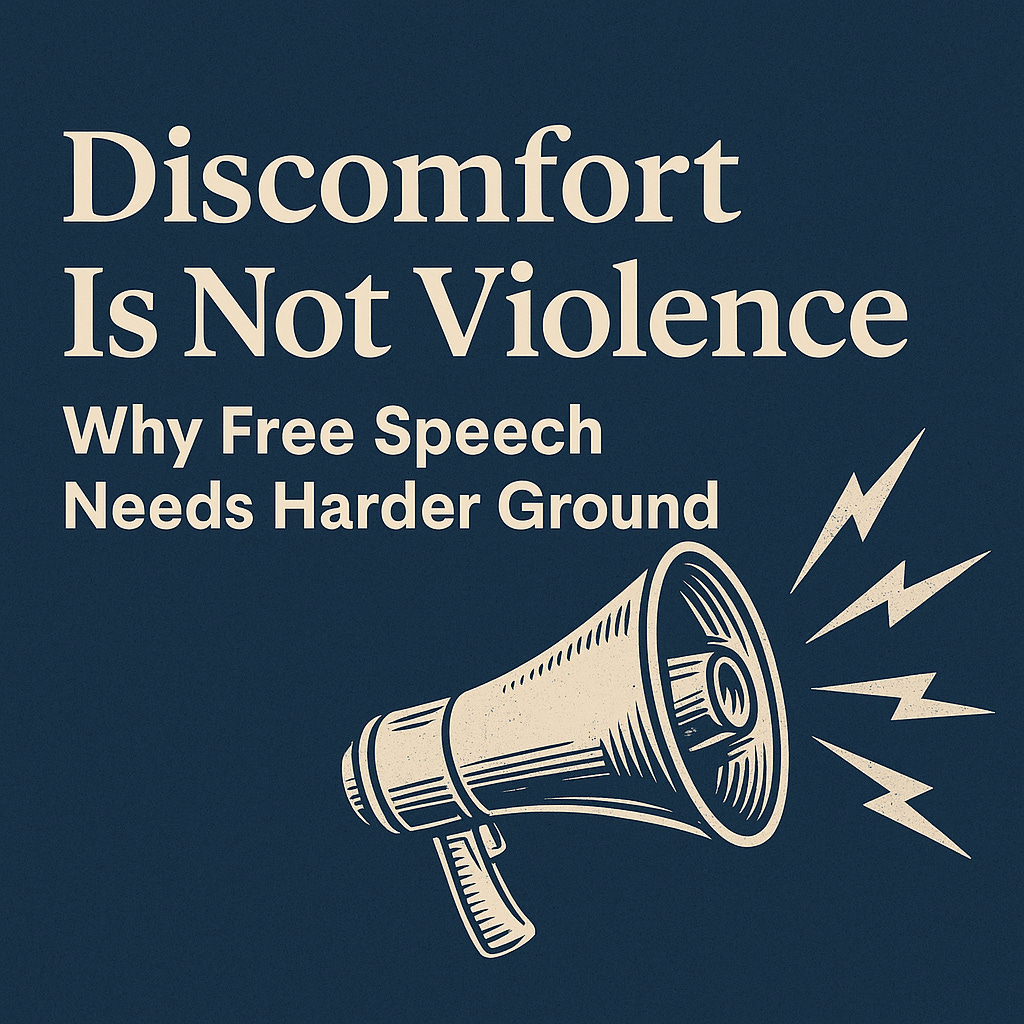
There should always be a space that allows our truths to be analysed side by side. That is the essence of debate. However, today, people often label conversations that challenge long-held habits as divisive before weighing them. When we rush to stereotype the speaker because the facts unsettle us, we do not defend truth; we block it.
This is not just about politics. Across sports, parenting, and business, we see a generational shift. Former athletes lament the loss of toughness. Older parents remember discipline that would now be unthinkable. In many workplaces, people still view discomfort as a seed for growth, but in civic life, people often treat it as harm. From there, people take only a short step to claim that speech is a form of violence. This is not to deny that words can wound. Targeted harassment, direct incitement, and coercion rightly draw legal and moral limits. However, harm and discomfort are not in the same category, and collapsing the two invites censorship and weakens civic life.
The result is a culture that seeks constant and instant gratification. We want ideas that feel good on contact. We forget that progress is forged in argument, not comfort. When people hear forceful rhetoric and label it divisive, we should ask whether the problem lies in the words or in our narrowing tolerance for blunt speech. The paradox of tolerance remains real. A free society must balance its commitment to blocking true calls to violence with its protection of open disagreement. Conflating discomfort with danger solves nothing and erodes the resilience needed to meet real threats.
Consider how we judge policy. When unconventional ideas surface, many dismiss them outright because they challenge orthodoxy. The better test is empirical. Strip out the noise. Observe outcomes. Revise as evidence accumulates. The same discipline that helps markets learn should guide civic debate.
History shows what is lost when we refuse hard speech. Socrates was condemned for impiety and for corrupting the youth, yet his questioning tradition became a pillar of Western inquiry. Martin Luther King Jr was branded an extremist and told to wait, yet his Letter from Birmingham Jail turned that label into a moral summons and moved a nation toward civil rights. Uncomfortable words often carry the seed of reform long before they are popular.
Free speech requires personal discipline. The first arena for reform is the individual mind; no regulation can substitute for courage in public dialogue. Constant self-reflection is not a luxury. It is the safeguard that keeps public life open to truths we did not expect and may not like.
If we cannot speak cold truth because a higher standard of living has made us fragile, are we really better off? The measure of a free society should not be how softly it speaks, but how bravely it listens.
Disclaimer
This article does not constitute legal, financial, or investment advice. The author shares views for perspective and discussion only. Do not rely on them as a substitute for professional advice tailored to your specific circumstances. Always consult a qualified legal, financial, investment, or other professional adviser before making decisions based on this content.
Canary Compass and the author accept no liability for actions taken or not taken based on the information in this article.
About the author
Dean N. Onyambu is the Founder and Chief Editor of Canary Compass. His insights draw on experience across trading, fund leadership, governance, and economic policy.
The Canary Compass Channel is available on @CanaryCompassWhatsApp for economic and financial market updates on the go.
Canary Compass is also available on Facebook: @CanaryCompassFacebook.
For more insights from Dean, you can follow him on LinkedIn @DeanNOnyambu, X @InfinitelyDean, or Facebook @DeanNathanielOnyambu.