

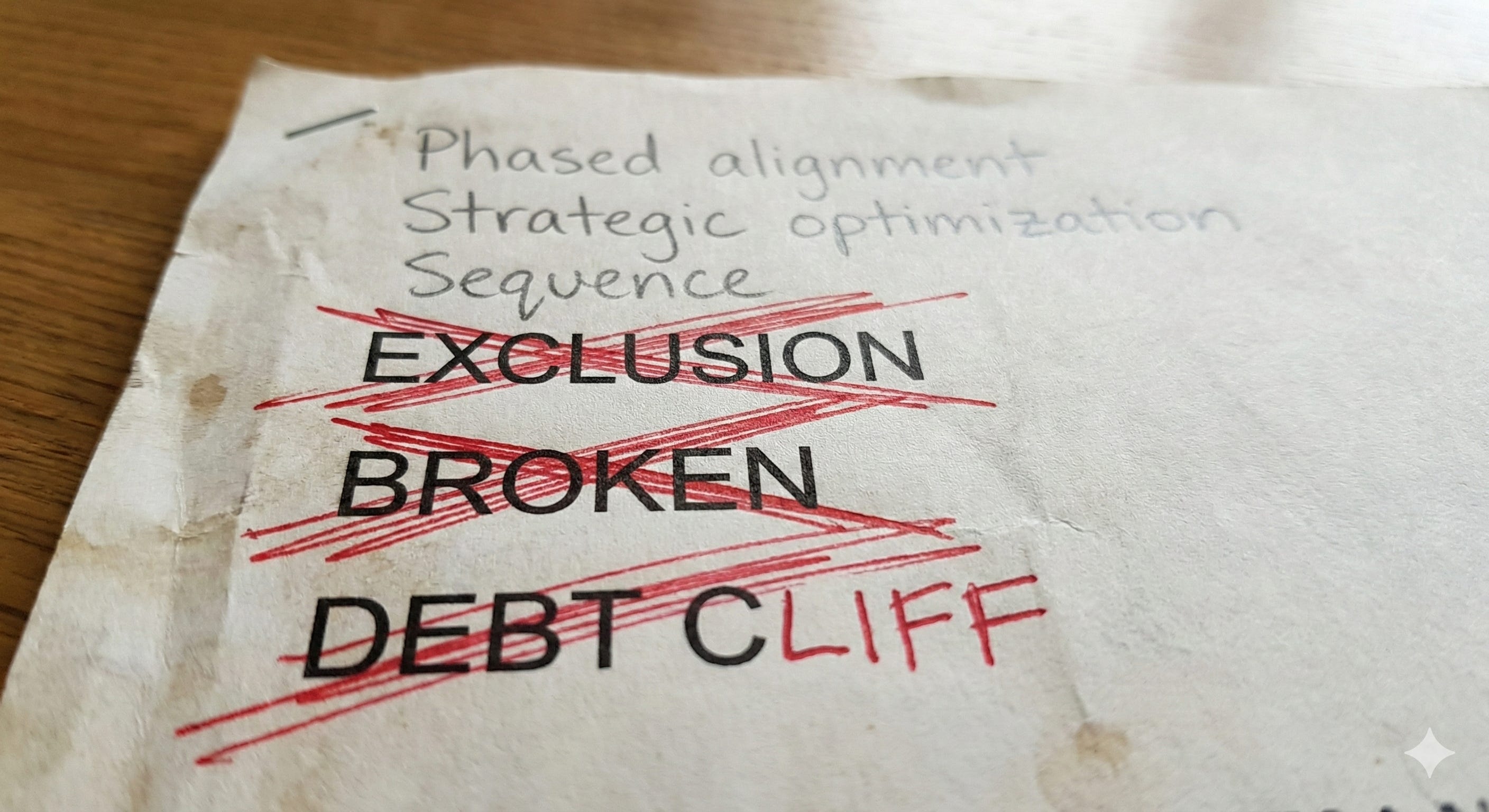
AI-generated Image: Professionalism as camouflage. Turning "Exclusion" into "Phased Alignment" doesn't change the reality.
The same paragraph. Four times.
The first version was clean. Logic held, frameworks aligned, evidence stacked properly. It argued that the African Continental Free Trade Area’s alignment strategy should prioritise countries positioned to meet absorber market requirements, with others joining as they restructure their vulnerabilities. Countries carrying certain external constraints weaken the bloc’s negotiating position. What could be strategic clarity becomes strategic ambiguity. And strategic ambiguity, right now, prices as unreliability. The argument is about sequencing alignment around structural readiness, while others address their constraints, not permanent exclusion from continental integration.
Second version softened the language. “Coalition of the eligible” instead of direct sequencing. Third version added more caveats. “Phased approach” instead of “prioritise the ready.” Fourth version rearranged the whole thing, hoping a different structure would make it land differently.
By the fourth draft, the problem became obvious. The language kept changing. The recommendation stayed the same. The discomfort wasn’t about phrasing. It was about what the structure revealed. Recommending that some African countries move first while others follow later, in an institution designed to end fragmentation. No amount of reframing changes how that feels.
This is what structural work costs: carrying what you prove to yourself when the logic points somewhere you wish it didn’t.
And this isn’t unique to the coalition question. Outcomes don’t resolve cleanly anymore. The Greenland debate this week proved it. One side saw Trump retreating with nothing, the other saw strategic positioning without escalation, both with evidence. The question stops being “what does the logic say” and becomes “what do you do when the logic is right, but the implication is unbearable.”
Most writing hides from this. When analysis gets uncomfortable, we retreat into jargon. “Risk-adjusted portfolio optimisation” instead of “cutting countries that can’t pay.” “Phased implementation” instead of “the weak ones wait.” “Strategic prioritisation” instead of “someone gets left behind.” The language sounds professional. Institutional. Defensible. But it’s camouflage. Technical framing doesn’t resolve moral weight. It pretends the weight isn’t there.
I sent the analysis to readers from different angles. Academic economists focused on the frameworks. Pan-African policy analysts focused on the implications. The technical language worked for one group. It changed nothing for the other. Because when you recommend structuring African integration in ways that some experience as exclusion, careful phrasing doesn’t make it feel less like betrayal.
Structural clarity doesn’t make hard choices easier. It makes them harder. You can’t pretend you don’t see what you see.
So you end up holding two truths that can’t coexist. The African Continental Free Trade Area only works if member states negotiate from collective strength. If two members sit on refinancing cliffs this year, Washington and Beijing can price bilateral relief against AfCFTA positions. The bloc loses unity before talks begin. Countries with manageable external positions can build credibility first. Others join as they address their constraints. That’s structural logic.
But the entire moral foundation of pan-African integration rests on ending fragmentation. On refusing to accept that some countries matter more than others. On building systems that include rather than exclude. Recommending sequencing that some experience as being left out violates that foundation. Structural logic doesn’t change it.
Both are true. No synthesis exists. Sometimes the right answer structurally is the wrong answer morally. Knowing which matters more is a choice the frameworks can’t make for you.
Three things emerge from carrying this tension.
Name the discomfort instead of hiding it. When your analysis leads somewhere uncomfortable, say so. “This recommendation contradicts pan-African solidarity principles” is honest. “Phased integration timelines allow for risk-adjusted implementation” pretends there’s no moral weight. One acknowledges the tension and proceeds anyway, or doesn’t. The other pretends the tension isn’t real. Clarity about the tension isn’t the same as resolving it. But it’s better than pretending it doesn’t exist.
State both truths even when they contradict. You don’t have to choose between structural logic and moral principle before publishing. Hold both. Let the reader carry the contradiction with you. We’re trained to resolve contradictions, not present them. But some contradictions don’t resolve. They just reveal what’s at stake.
Accept that being right doesn’t exempt you from burden. Getting the analysis right (frameworks applied correctly, evidence cited properly, logic following cleanly) doesn’t make the implication easier to carry. It makes it heavier. Because you can’t dismiss what you’ve proven to yourself. This is the tax serious work pays. You see clearly. What you see demands something from you, intellectually and morally.
I still don’t know whether to publish the coalition argument as written. The logic holds. The evidence supports it. The frameworks validate it. But that’s not the question that matters. The question is what you do when you prove something you wish weren’t true. You can soften the language. Add caveats. Reframe the sequencing. But you can’t unsee what the structure revealed. And you can’t pretend the weight of that seeing belongs to someone else.
Once you see it, you own it. Four revisions don’t change that.