

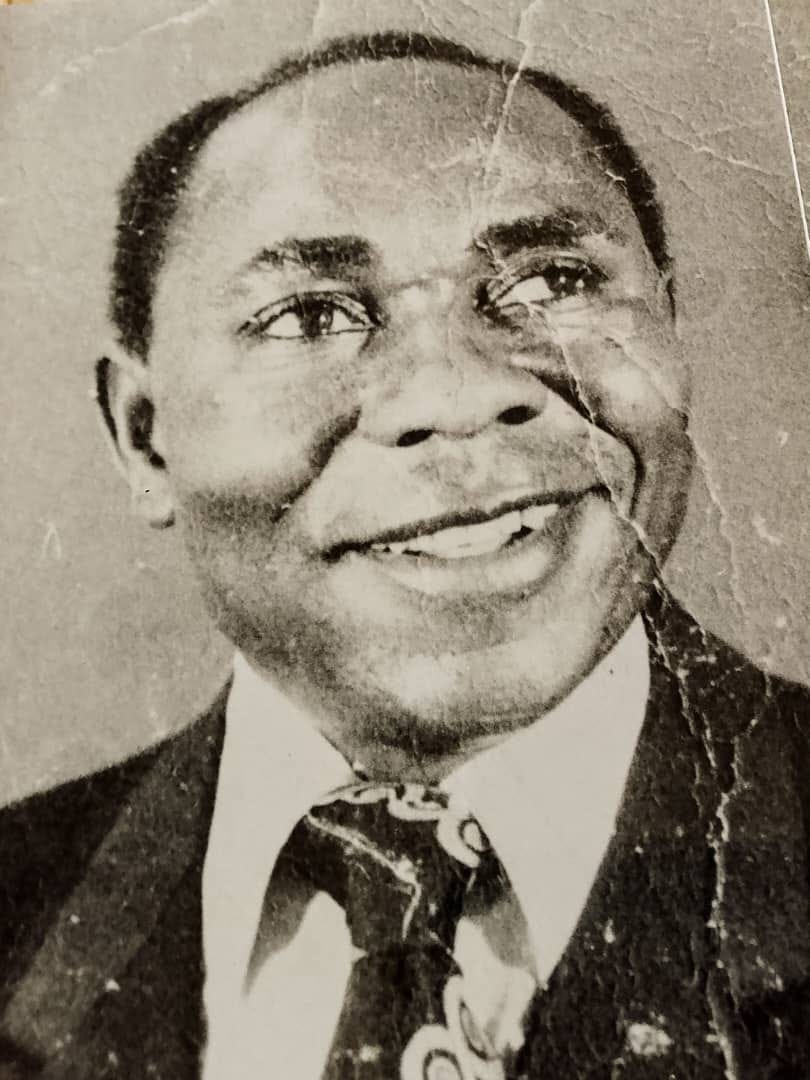
Image: Pambi Mwape Mukula
Video available on X
Originally published last Friday. Now added here for the archive. Other Friday Reflections remain available on LinkedIn and X.
There is a picture I saw this week that stayed with me. It is my grandfather, Pambi Mwape Mukula, the first Zambian Director of the National Archives after independence. He was part of the Zambianisation wave of the 1970s and helped shape archival practice in East and Central Africa, later publishing Archives in the National Development in 1985, a year after I was born.
Then my cousin added an AI edit.
In the clip, my grandfather says, “I miss you all.”
He has been gone for years.
Hearing that voice again stopped me cold.
It also brought back a moment from when I was 12. I once asked him about Bemba origins. He wrote five pages in small script, mapping the Bantu migration route into Zambia. That was my first map. My first lesson that structure explains what noise hides.
That memory shaped how I read the week.
In the DotCom Zambia IPO debates, I kept returning to Safaricom. The hype, the leap, the slide below IPO, the retail exit, and the eventual return once fundamentals aligned. Memory separates structure from excitement.
The same idea shaped my monetary policy work. Zambia’s challenges are structural. Shallow liquidity. Weak transmission. Fragile balance sheets. These behave like migration paths. Once formed, they influence everything downstream until the system is rebuilt.
Politics in Kenya followed the same pattern. By-elections create noise. Coalitions move on incentives, geography, and history. The behaviour underneath is structural.
Then came the AI discussions. The MIT Iceberg Index shows AI can already perform tasks equal to 11.7% of the US wage bill. Many see disruption. I see something deeper. AI is becoming a curator of memory. It can recreate a face or a voice. It cannot recreate meaning. That remains our responsibility.
The AI clip of my grandfather made that clear. Technology can echo the past, but we must protect the truth those echoes rest on.
That is what he spent his life doing. Preserving Zambia’s institutional memory. He understood that archives are anchors. They keep a nation steady. They protect stories from distortion.
Maybe that is why my work gravitates toward structure.
Origins matter.
Patterns matter.
Memory matters.
The lesson from this week is simple.
Memory is clarity.
Memory is an advantage.
Memory builds systems that last.
Today I honour my grandfather.
A man who shaped how a young nation remembered itself.
A man who gave me my first map.
A man whose voice I heard again this week through AI.
A reminder that the past still speaks, and we must listen.