

Editor’s Note (Updated May 16, 2025):
This article was revised to reflect the current status of U.S. tax legislation that could affect the Portfolio Interest Exemption (PIE). While the proposed bill does not explicitly repeal PIE, it introduces a new Section 899 that imposes a 5% surtax on U.S. income earned by certain foreign investors, including those protected by bilateral tax treaties. This provision may reduce or override the practical benefits previously afforded by PIE. Although the bill remains at the committee stage, it signals a potential shift in U.S. capital taxation with implications for global dollar liquidity. The broader analysis remains relevant for economies with internal dollarization vulnerabilities.
A recent U.S. tax proposal includes provisions that could functionally erode the Portfolio Interest Exemption (PIE), a long-standing rule that allows non-U.S. investors to receive interest income from U.S. Treasuries free of withholding tax. While PIE itself is not explicitly repealed, the proposed 5% surtax in Section 899 would apply even to investors covered by treaty-reduced withholding rates, thereby diminishing PIE’s practical benefits. Even at the legislative proposal stage, this shift signals a potentially consequential reconfiguration of global dollar liquidity, with serious implications for internally dollarized economies such as Zambia. For decades, PIE has reinforced U.S. Treasuries as a pillar of the eurodollar system and related offshore funding markets.
The erosion of PIE’s benefits through the proposed Section 899 surtax would introduce a new layer of tax friction into this structure. While the bill does not explicitly repeal PIE, it proposes a 5 percentage point increase on U.S. income earned by certain foreign investors from jurisdictions deemed discriminatory by the U.S. Treasury, even those covered by bilateral tax treaties. Some interpretations of the legislative language suggest that the Treasury may have the authority to impose a higher rate, up to twenty percentage points, though this is not structured as a scheduled escalation.
While the precise adjustment path remains uncertain, and U.S. Treasuries will likely retain their core status due to their liquidity and benchmark role, even modest changes in marginal demand, particularly among tax-sensitive institutions and hedge funds, could result in tighter offshore dollar availability. Substitution via tax treaty jurisdictions or sovereign vehicles may buffer the effect, but historical precedent suggests that small frictions can gradually alter capital allocation patterns over time.
Concurrently, U.S. domestic policy appears to be preparing for this transition. The Supplementary Leverage Ratio (SLR), a regulatory capital constraint that limits how much low-risk assets, such as Treasuries, that banks can hold, is being recalibrated to expand domestic absorption capacity. In parallel, the proposed GENIUS Act, which aims to bring stablecoin reserves under U.S. regulatory purview by requiring U.S. Treasuries or equivalent instruments to back them fully, signals a further intent to consolidate control over dollar-based liquidity within the onshore system.
This does not yet amount to a capital firewall in the formal sense, but if these elements converge — tax disincentives, regulatory tightening, and digital asset integration — the net result may functionally resemble one. The recentralization of dollar intermediation would limit the flexibility of offshore actors and enhance U.S. oversight over monetary transmission. The eurodollar system is resilient, but it is not immutable. Even if partial or delayed, the erosion of PIE reflects a broader shift and may become one of several levers reconfiguring global dollar distribution over time.
To be clear, this is not a call for de-dollarization of international trade settlement or official reserves. Rather, it is a domestic-facing recommendation for emerging markets, particularly those with high levels of internal dollarization, to evaluate their vulnerability to a shifting dollar liquidity landscape.
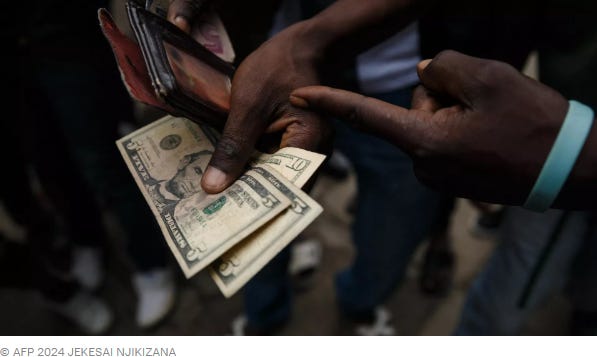
Among dollarized economies, Zambia stands out as a pertinent case study. The U.S. dollar remains widely used in local contracts across real estate, wholesale supply chains, and even informal retail pricing. This internal reliance on foreign currency introduces structural vulnerabilities. If offshore access to dollars becomes more constrained due to shifts in U.S. policy or global capital flows, countries that have not built robust local currency ecosystems may face exchange rate mismatches, rising imported inflation, and diminished monetary policy effectiveness.
The recommendation here is grounded in financial logic, not ideology. Zambia and its peer economies should strengthen local currency usage in domestic contracts, deepen local-currency-denominated financial intermediation, and reduce structural reliance on foreign currency for non-trade, non-reserve purposes.
Importantly, the proposed erosion of PIE through the Section 899 surtax may not proceed in its current form. Legislative resistance, market feedback, or administrative delays may dilute or defer the proposal. The GENIUS Act also remains under debate, and its final form could evolve substantially. These uncertainties, however, do not weaken the signal. Offshore dollar access is becoming more conditional, more regulated, and less frictionless than before.
In this context, the de-dollarization of domestic activity is no longer speculative. Zambia, for instance, has already laid important groundwork through recent foreign exchange reforms, enhanced export monitoring, and tighter import payment controls. These are not cosmetic changes. They are preparatory steps. The remaining challenge lies in sustaining momentum and finally executing implementation with credibility and consistency.
Tanzania offers a more assertive example. The government has implemented a nationwide ban on using foreign currencies in local transactions, requiring all goods and services to be priced and paid for in Tanzanian shillings. While such a policy requires disciplined enforcement and institutional readiness, it reflects an effort to reclaim monetary autonomy through legal and structural mechanisms.
The global flow of dollars is changing. For Zambia, where internal dollarization remains entrenched, the capacity to operate domestically in local currency is no longer optional. It is a matter of economic resilience, institutional maturity, and policy foresight.
Disclosure: While some legal commentaries note that Section 899 authorizes the Treasury to apply a withholding increase of “up to 20 percentage points,” no automatic escalation is written into the bill. This remains a discretionary ceiling rather than a scheduled increase.
Dean N Onyambu is the Founder and Chief Editor of Canary Compass, a co-author of Unlocking African Prosperity, and the Executive Head of Treasury and Trading at Opportunik Global Fund (OGF), a CIMA-licensed fund for Africans and diasporans (Opportunik). Passion and mentorship have fueled his over 17-year journey in financial markets. He is a proud former VP of ACI Zambia FMA (@ACIZambiaFMA) and founder of mentorship programs that have shaped and continue to shape over 50 financial pros and counting! When he is not knee-deep in charts, he is all about rugby. His motto is exceeding limits, abounding in opportunities, and achieving greatness. #ExceedAboundAchieve
The Canary Compass Channel is available on @CanaryCompassWhatsApp for economic and financial market updates on the go.
Canary Compass is also available on Facebook: @CanaryCompassFacebook.
For more insights from Dean, you can follow him on LinkedIn @DeanNOnyambu, X @InfinitelyDean, or Facebook @DeanNathanielOnyambu.