

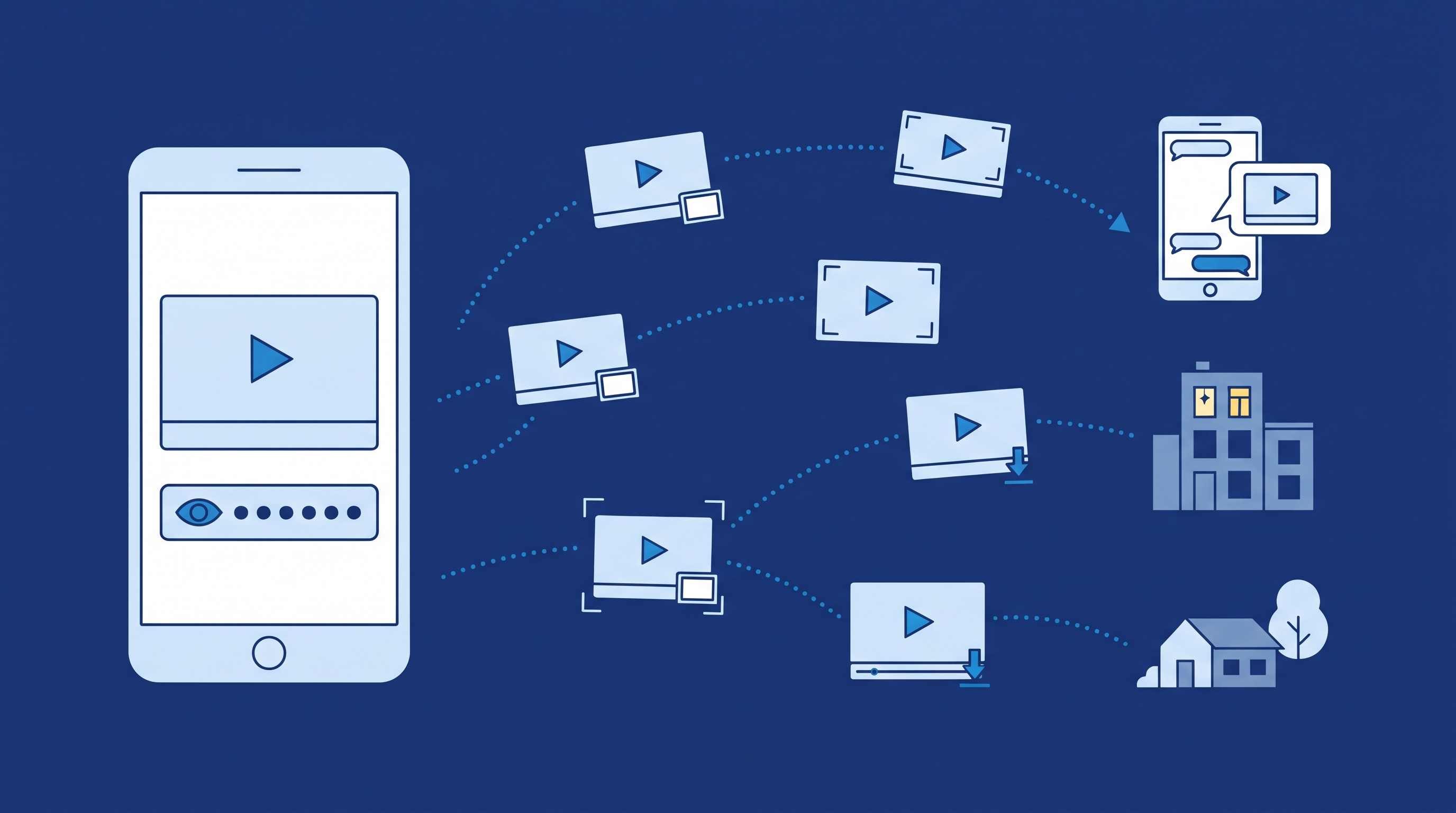
AI-illustration: One post is counted. The copies that people download, screenshot and pass on are not.
Canary Compass will move to paid subscriptions soon. Founding members put a question to Dean every month and join a quarterly call. Founding membership is limited to 50 people and closes at launch. Pledge now; you pay nothing until paid publishing begins. Friday Reflections will stay free. See every plan and what it includes. Institutional licences: dean@canarycompass.com
I don’t watch The Real Housewives of London, but this week it was all over my TikTok feed. In part one of the reunion, Karen Loderick-Peace told Amanda Cronin that she lives in a mansion in Belgravia, and that all Amanda has is one mews house. Then she called her low budget, in cruder words than I’ll print. Hayu, which streams the show, put the episode out on Monday.
I saw it early, on Tuesday morning, because I’m on TikTok and it was trending. Adults who aren’t on TikTok got it later, from shares. More adults are on TikTok now. Pew Research Center’s latest survey has 58 per cent of Kenyan adults saying they use it, up from 37 per cent in 2023.
It was shocking, then hilarious. The way Karen said it had a melody, and the delivery was flawless. So I downloaded the clip and sent it to a few friends. Over the next two days, friends started sending me videos they had downloaded. Some had turned the line into songs, in every style from the 1940s to reggaeton and dancehall. One was a parody. Most came on WhatsApp, and a few on TikTok and Instagram. I’m not even on Facebook, but I still read Facebook posts, because relatives and friends screenshot them or send me a link.
The old way of watching television has changed. A lot of what people post on TikTok or X now ends up in WhatsApp groups and in homes, in urban and rural areas, with people who use neither app. If I send you a link, you go back to the original post and it counts your view. If I send you the file, it counts nowhere. A screenshot does the same for a written post. The Atlantic called this dark social in 2012, when it was links going round by email. WhatsApp encrypts personal chats, so not even Meta, which owns it, can see what’s in them, or so they say. And even if Meta could, whoever first put the clip out can’t. That matters to anyone selling something, anyone running a campaign, and any government.
Hayu picked the insult for its trailer, and I picked who got my copy. I’ve never paid Hayu, and still I advertised its show to my friends for free. The full episode sat behind a subscription I never needed.
Kenyan politics has a line that got to me the same way, through TikTok. Nairobi Senator Edwin Sifuna asks each side of a rally crowd, in Swahili, mnaniona vizuri? (”can you see me well?”). The Star calls it his catchphrase. Now whenever someone asks umeniona? (”have you seen me?”), his line is the first thing I hear, in his voice, with his cadence. No single platform represents Kenya. A line like that lands in the family WhatsApp group, where relatives on different apps argue about it. Ahead of the 2027 election, a campaign’s follower count on one platform won’t show you that. What people pass on tells me what caught their attention. How they’ll vote is a separate question.
The London line also sent me to find the back story: mansions in Belgravia, and what a mews house looks like. I wasn’t alone. On TikTok I saw people asking which costs more, a mews house or Belgravia. When I checked Google Trends on Wednesday, worldwide search interest in “mews house” was up 1,600 per cent on the week before. Mews houses began as the stables and coach houses behind London’s grand terraces, and Amanda’s is in Belgravia too. Luxury Lifestyle Magazine reported that she paid 3.5 million pounds sterling (GBP) for it in 2020, and valued the finished house at about GBP12m. On the property site Rightmove, terraced houses in Belgravia sold for GBP4.6m on average over the last year. Nothing in Belgravia is low budget.
Governments spend heavily to win that kind of interest abroad, on embassies, broadcasters and cultural centres. They are after what Joseph Nye, who coined the term, called soft power. He meant a country getting what it wants by attracting people, without force or payment. But Nye wrote that much of America’s soft power comes from its civil society, including Hollywood and pop culture, and not from its government. The Real Housewives is an American format, and Hayu is American-owned. No government sent me that clip. People like me sent it on for nothing, and strangers ended up reading about London houses. That is low-budget soft power, and it travels by screenshot and download.
It starts small. We were laughing, so I can’t claim it made anyone admire London. People can know a country without liking it. Brand Finance’s Global Soft Power Index scores countries on familiarity, reputation and influence. This year America ranks first for familiarity and 26th for reputation. Its pilot research found that news and social media are the commonest way people first hear of a country and the weakest way to make it familiar. What does more is everyday exposure, repeated.
Most clips on my feed are gone in days. This one keeps coming back, and repetition is how things stick. Delivery is the other half. It’s why you can still sing adverts from your childhood. Karen used the same phrase five times, then finished on a short line with Amanda’s name in it. When that line comes back, it comes in her voice and her tone. On TikTok I’ve seen people say they can’t get it out of their heads. By Thursday CNN was explaining it to Americans, next to a line from a 2008 reunion that people still quote eighteen years on.
I’m careful now with any count of views or followers that claims to show what a country is watching. I’d sooner look at what people download and pass on, what they go looking for afterwards, and what stays. The next time I meet an Amanda, even one I already know, I know which line will come to mind first.