

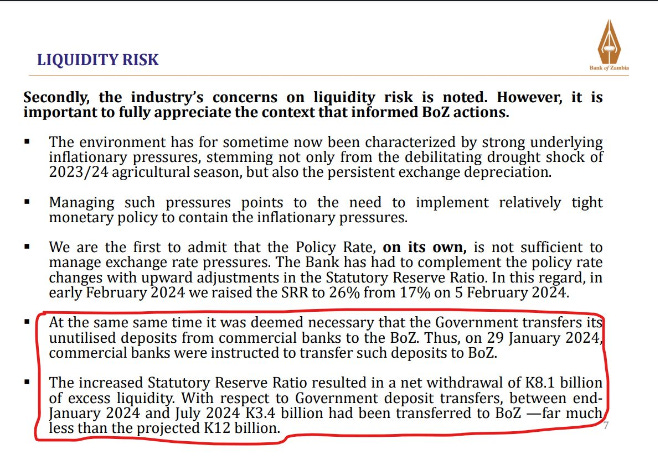
By the end of July, banks had transferred only K3.4 billion of the expected K12 billion (28.3%), exposing a systemic failure within the banking industry's compliance framework. While some banks adhered to the directive from fiscal authorities and responsibly adjusted their balance sheets, others benefited from leniency, receiving multiple extensions over the last six months. This uneven enforcement creates an inequitable landscape.
Selective compliance undermines the core purpose of fiscal and regulatory directives. Authorities must apply these directives equitably to maintain a level playing field. Inconsistent enforcement fosters an unfair competitive environment and erodes confidence in the financial system's integrity. When fiscal authorities fail to enforce directives uniformly, they jeopardize the trust that underpins the banking sector.
Notwithstanding the positive strides made by fiscal authorities, such as the rise of the short end of the curve and the one-year T-bill rate to 19%, these actions do not alleviate the urgent need for uniform compliance enforcement. The current low compliance rate sets a dangerous precedent, potentially emboldening institutions to disregard future directives, given the possibility of inconsistent enforcement. The consequences of inaction could be severe.
To uphold trust and stability in the financial sector, fiscal authorities must enforce these directives with the utmost seriousness. Equitable enforcement is not just a matter of procedure but a crucial element in preserving the credibility of the compliance framework and ensuring long-term stability.
It is crucial to acknowledge the central bank's success in curbing the currency's upside by boldly addressing money supply excesses. Fiscal authorities must sustain this momentum by enforcing the transfer of government deposits and maintaining a steadfast will to implement SI33, which is vital for addressing dollarization in the economy.
Presentation link: REMARKS BY THE GOVERNOR ON THE LAUNCH OF THE 2023 BANKING INDUSTRY SURVEY REPORT BY PwC
#zambia #kwacha #zmw #usd #dxy #mofnp #boz #moneysupply #governmentdeposits #si33 #dedollrization
Dean N Onyambu is the Founder and Chief Editor of Canary Compass, a co-author of Unlocking African Prosperity, and the Executive Head of Trading at Opportunik Global Fund (OGF), a CIMA-licensed fund for Africans and diasporans (Opportunik). Passion and mentorship have fueled his 15-year journey in financial markets. He is a proud former VP of ACI Zambia FMA (@ACIZambiaFMA) and founder of mentorship programs that have shaped and continue to shape 63 financial pros and counting! When he is not knee-deep in charts, he is all about rugby. His motto is exceeding limits, abounding in opportunities, and achieving greatness. #ExceedAboundAchieve
The Canary Compass Channel is available on @CanaryCompassWhatsApp for economic and financial market updates on the go.
Canary Compass is also available on Facebook: @CanaryCompassFacebook.
For more insights from Dean, you can follow him on LinkedIn @DeanNOnyambu, X @InfinitelyDean, or Facebook @DeanNathanielOnyambu.