

Canary Compass will move to paid subscriptions soon. Founding members put a question to Dean every month and join a quarterly call. Founding membership is limited to 50 and closes at launch. Pledge now; you pay nothing until paid publishing begins. Friday Reflections will stay free. See every plan and what it includes. Institutional licences: dean@canarycompass.com
This week, about 32,000 retirees in Paraguay learnt that they will collect their November pensions at other banks, most of them assigned by their pension institute, the Instituto de Previsión Social. Payments go out from 17 November. On 3 November the central bank put their old bank, Ueno, into resolution, its solvency below half the required minimum. The institute had about USD345m of its members’ money there in deposits and bonds, some 9 per cent of its portfolio by its own count. Ueno paid about 11 per cent, the second-best rate in the market. A report in July had found the institute over its legal limit for deposits in a single bank, which it said it then corrected. In late October members and workers’ groups asked it to pull the money out. Its investment director replied that the bank met the institute’s risk criteria, and that term deposits were not easy to withdraw. A week later the money sat trapped. The central bank’s own president had run Ueno’s predecessor before taking office in 2023.
It was Paraguay’s second pension story of the year. In March the country reformed the Caja Fiscal, the pension fund for its teachers, judges, police and other public servants. In the sectors running deficits, workers’ contributions rose from 16 to 19 per cent of pay, and for the first time the law wrote in a state contribution, set at 10 per cent. Teachers, university staff and judges now need to be at least 53, with 25 years of contributions, before they retire. Teachers protested outside Congress as it voted. A ruling-party deputy called the reform barely a patch: by her estimate it cuts the deficit from about USD800m to about USD600m.
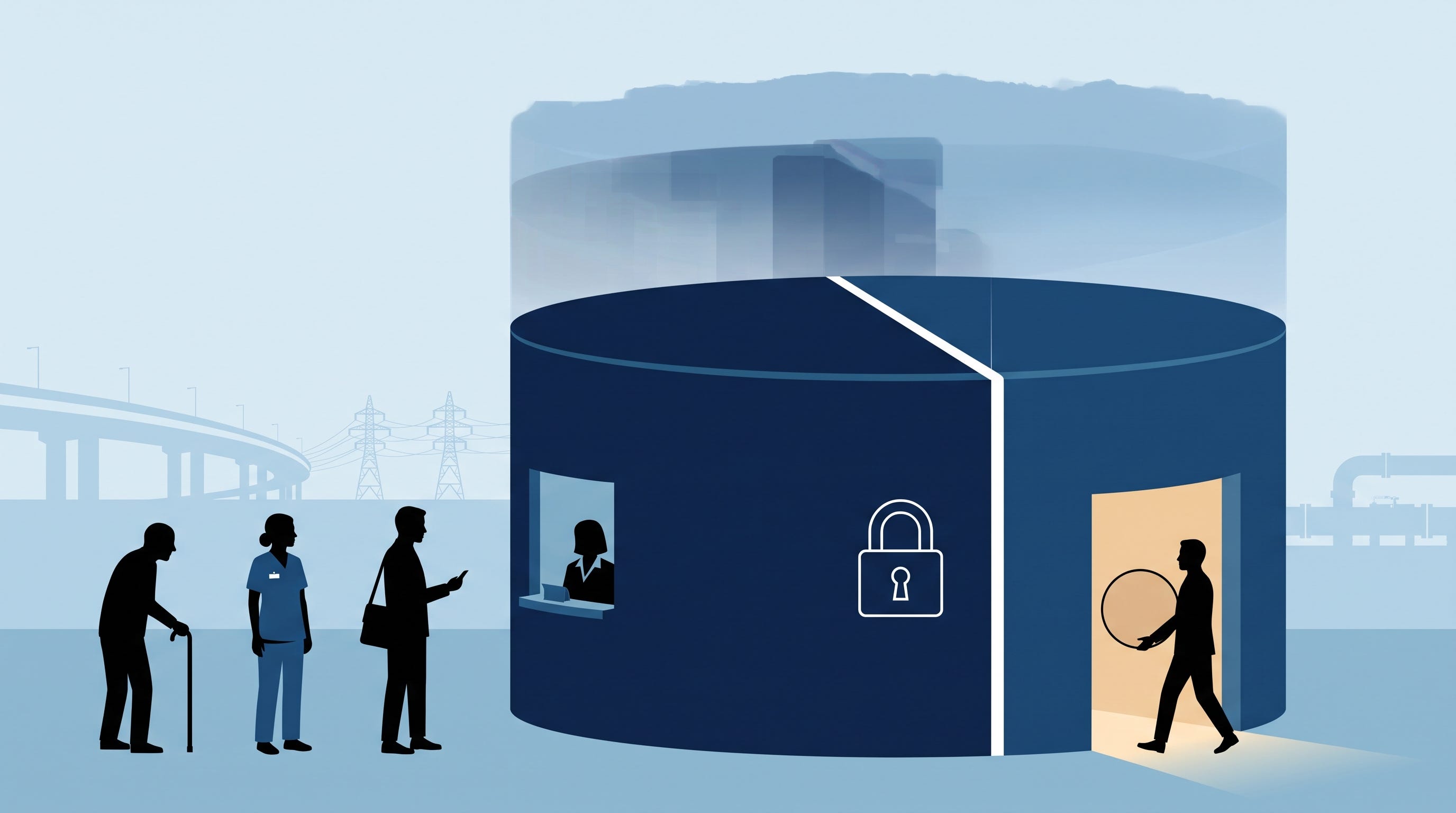
One country, in one year, has raised every question a pension member should ask. Does my money earn a proper return, safely, towards a pension that can actually be paid? Can I choose how much risk it takes, or move it when I am worried? Can I use part of it before I retire, without wrecking my retirement? And does the state pay what it owes into the pot, and keep its hands off the investment decisions? Paraguay has just forced every one of them into the open in a single year. Anyone with an African pension should put the same four questions to his own.
Until 1997, Canada did with its national pension what many African governments do today. Workers’ contributions to the Canada Pension Plan were lent straight to the federal and provincial governments, in 20-year bonds the fund could not sell. Then Parliament changed the law. It set up an independent board and gave it one job, owed to the plan’s members. In the law’s words, that job is “to invest its assets with a view to achieving a maximum rate of return, without undue risk of loss.” It also made the law hard to change. An amendment needs the federal government and two thirds of the provinces, holding two thirds of the population. The lock has faced two tests. In March 2024 about a hundred business leaders asked the finance minister to push pension money into Canadian companies. The fund replied in public that pension funds “are not designed to achieve regional economic development or corporate subsidies.” In October 2025 a minister pressed again, and the fund held its line. By March 2026 it held 793.3 billion Canadian dollars (CAD), about USD570bn, and had earned 8.8 per cent a year over ten years.
Canada is the opposite case. Its fund answers to one mandate, and has defended it against its own ministers in public. It answers the first and the last of the four questions superbly. It barely touches the middle two, and for one pooled plan covering some 22 million Canadians, that is a sound choice. Members who want choice and access need a different design.
Pension schemes come in two basic shapes, and the shape decides which questions a member can even ask. In the first, the pension is a promise. The law fixes what he will receive, usually from his pay and years of work, and the scheme and the state behind it must find the money. Specialists call it defined benefit. In the second, the pension is an account in his own name. Contributions go in, investment results add or subtract, and at retirement he gets what the account has become. That is defined contribution. In the public promise schemes of this story, the state carries the final bill. So it guards the promise on paper and is tempted to skip today’s payment, because the hole lands on a future government. In an account scheme the member carries the result, so he has every reason to want a say. Paraguay’s Caja Fiscal is a promise, which is why its deficit fell on the state to close, and why the March reform reached for contributions and the retirement age.
Paraguay’s members asked, and their institute said no. In America’s 401(k), the account shape built for the member, the money answers to him. Each worker’s payslip feeds his account, and his employer usually tops it up. He picks investments from a menu, and if he never chooses, many plans sit him in a fund that grows safer as retirement nears. He can borrow from himself where his plan allows it, up to half of what has vested and never more than USD50,000, and repay through his payslip.Malaysia shows that a national fund can pay well and still open a door. Its Employees Provident Fund (EPF) has paid dividends above 5 per cent for three years running, on a legal floor of 2.5 per cent for conventional savings. Since May 2024 each contribution has been split three ways. Three quarters goes to retirement, 15 per cent to housing, education and health, and 10 per cent to a flexible account the member can draw on at any time. The retirement share stays locked, and Malaysia learnt why the hard way. During the pandemic the government let members withdraw 145 billion Malaysian ringgit (MYR), about USD34bn, in four rounds. Afterwards more than half of its members under 55 had less than MYR10,000, about USD2,200, left for old age.
The mechanism behind Paraguay’s March law is simple. When the money coming in cannot cover the pensions promised, a government has three ways out within the pension itself. It can collect more, by raising contributions. It can pay less, by cutting what each pension is worth. Or it can pay later, by raising the age at which pensions start. Paraguay used two of them at once. Italy shows where that road runs over the years.
Italy’s state pension is a promise paid from today’s money: today’s workers fund today’s pensioners, with no large pot behind them. Italy spent the equivalent of 15.3 per cent of GDP on pensions in 2024, among the highest shares in Europe. In November 2011, with the eurozone in crisis, Italy’s borrowing costs rose more than 5.5 percentage points above Germany’s. Berlusconi resigned, and on 4 December 2011 Elsa Fornero, the new labour minister, presented the pension reform. She broke down at the press conference and could not finish the word for sacrifices. Women’s retirement age rose towards 66, and the reform moved every worker’s years from 2012 onto a pension worked out from what he had paid in. Today the standard age is 67, and from 2027 it rises again. Italy used all three ways out, and the one people remember is the age.
Africa’s version of the crisis has a name: arrears. The state, as an employer, owes the pension funds money it has not paid in. Sometimes it took the worker’s share from his payslip and never sent it on. Sometimes it skipped its own share. My reading is that one of the three ways out is already in use. Italy wrote paying later into law, one rule for everyone. Much of Africa practises it one retiree at a time, as a bill left unpaid. Kenya’s National Social Security Fund (NSSF) is the account shape, by its 2013 Act. Every member has an individual account, and his pension is whatever that account can buy when he retires. The Act calls the government a guarantor of the public interest in the fund; it guarantees no pension. Civil servants under 45 moved to a contributory scheme of the same kind in January 2021. So the Kenyan member carries his own result without the account’s freedoms. His employer may move part of the contributions to a private scheme; he himself may move nothing. Inside the fund there is one portfolio, and a 25-year-old and a 59-year-old sit in it together. His one door is narrow, a pledge of part of his benefits to back a housing loan where his scheme allows it, and the courts killed the wider one, withdrawal for a home, in 2022.
The Kenyan state also falls behind on what it owes. Its counties owed pension schemes 115.9 billion Kenyan shillings (KES), about USD900m, at the end of 2025, by the Parliamentary Budget Office’s count. The bill is unpaid deductions, the interest and penalties on them, and the funding hole they left behind. At the national level, a public servant leaving service waits 195 days, on average, for his benefits; on 5 October the President ordered them paid within ten. Retirees of Nairobi’s water company have waited close to 20 years.
Nigeria chose the account shape in 2004 and then built most of its freedoms. Every covered worker has a Retirement Savings Account with a licensed private administrator. Since 2018 the money has sat in funds sorted by age, and a worker under 50 may move one step bolder. He can move to another administrator once a year if he loses faith in his own, the step Paraguay’s members could not take. Since 2022 he may put up to a quarter of his balance towards the equity a mortgage lender requires on a home. A worker out of a job for four months may draw as much as a quarter of what he has saved. The Nigerian state leans hard on that pot, and owes it money too. More than half of pension assets sit in federal government securities, and the regulator has said that concentration limits the system’s ability to beat inflation. In February 2025 the government approved a bond of 758 billion Nigerian naira (NGN), about USD505m, to clear its pension debts, including its own unpaid employer contributions for 2017 to 2021. By mid-2026 the regulator reported that backlog paid. The states owed another NGN626.8bn, about USD435m, in 2025, by BudgIT’s count.
Zambia keeps the promise shape for its National Pension Scheme Authority (NAPSA), with an actuary checking whether the fund can pay what it owes. In April 2023 members got their first door, a one-time withdrawal of a fifth of their contributions. A new National Pension Scheme Act, signed in June and in force since August, writes the doors into the main statute. A member may take a fifth of his indexed contributions early and another lump sum just before retirement, with a smaller minimum pension in return. The same Act widens the state’s side too, letting the fund enter joint ventures and co-investments.
Zambia’s civil servants sit in an older promise with almost nothing behind it. The Auditor-General found that the Public Service Pensions Fund holds assets covering 9 per cent of what it owes, at its last actuarial check. Like Paraguay’s Caja Fiscal, it is a promise the state must fund.
Ghana runs both shapes, by tier. The first, run by the Social Security and National Insurance Trust (SSNIT), is a promise. The second, worth 5 per cent of pay, is an account run by licensed private trustees. Ghana’s 2008 law lets a member pledge his second-tier benefits and use a voluntary third-tier account to secure a mortgage. In 2022 the regulator called those provisions largely unused. The door was in the law, and almost nobody had walked through it. Ghana also shows how a state can reach into the pot on terms, and pay its way out. Its 2022 debt exchange exempted every pension fund after a strike threat. The state came back in July 2023 with a voluntary offer for the funds alone. Face value stayed whole, the bonds swapped into new ones due 2027 and 2028, and a side bond kept most of the old interest flowing. It was a request rather than an order. The state had also left more than 3 billion Ghanaian cedis (GHS), about USD290m, unpaid to SSNIT over a decade, by a World Bank count. Then it caught up, reporting the arrears cleared by 2025 and itself current since.
South Africa runs both shapes side by side. The Government Employees Pension Fund (GEPF) is a promise, guaranteed in law, and it held more than it owed at its last valuation. A commission of inquiry into the Public Investment Corporation, which manages most of its money, found in 2020 a dysfunctional board and deals done without proper care. When the governing party floated forcing pension funds into prescribed state assets, the country argued it in the open and dropped it. In September 2024 South Africa also opened a wide member door. Under its two-pot system, a third of every new contribution goes into a savings pot the member can draw on once a tax year, while two thirds stay locked. It covers the government fund too. The arrears there sit with thousands of defaulting employers, by the regulator’s count: private firms, municipalities, and a state-owned Post Office. Its workers’ fund has seen 12 cents for each rand of contributions never paid in.
Run the five against the four questions and a pattern shows. On returns, only Nigeria makes its administrators publish their returns each month, where anyone can mark them. On choice, Nigeria alone writes risk-sorted funds into every account by law. On access, South Africa, Nigeria and Zambia have working doors, Ghana’s stays on paper, and Kenya’s is one narrow pledge. On the last question, whether the state pays what it owes and keeps its hands off, every one of the five has fallen short on one half of it or the other. Ghana has paid its way back, and Nigeria’s federal bond has now done the same; the counties and states behind them have not. Of the five, Kenya’s members carry the hardest combination. Its members bear their own results, like Nigeria’s, with little of what Nigeria gives back.
Three things follow. The first is that arrears and infrastructure are the same problem. Governments ask pension funds for long-term money for roads and power while failing to pay what they already owe in. What Kenya’s counties owe their workers’ schemes is nearly four times the up to KES30bn, about USD230m, NSSF has put forward for the Rironi to Mau Summit toll road. They are different funds, but it is the same pool of Kenyan pension savings. Arrears are a loan nobody approved: taken from workers without a vote, past the due dates the law sets, at a penalty rate nobody collects. Every unpaid deduction is capital the pool never received. The second is that the member’s door is cheap. The usual objection to 401(k)-style access is that withdrawals drain the long money a continent needs. The record so far says the drain is small. South Africa’s two-pot withdrawals came to under 1 per cent of its retirement industry’s assets in their first five months. Malaysia’s members took about 1.4 per cent of their fund through the flexible account in two years. Both doors open onto new contributions and a capped sum seeded from the old balance, while the bulk built over decades stays locked. That is the design. Chile is the warning on the other side: three pandemic rounds, a tenth at a time, paid out about USD50bn by early 2022 and left three million accounts at zero.
The third is that Africa’s pools are small in part because so few people are in them. Kenya counts 21.6 million people in recorded work, and only about 3.5 million of them in modern-sector jobs. A trader or a motorbike-taxi rider will rarely lock money away in a pot he can never touch, whatever it earns. So a door, held to a slice, need not shrink an African pension pool. It may be how the pool grows, because it gives the people outside a reason to come in.
That leaves the real tension, between the member who wants his money working for him and a continent that needs patient capital for large projects. It can be settled by design, and the parts already exist in the countries above. Where the money is actually saved, split the member’s pot into a locked core and a smaller slice he can use, as Malaysia and South Africa do. A promise scheme prices any door against the pension it reduces, as Zambia’s new Act does. Hold cash for the pensions and draws the fund already expects, so a draw does not force a sale. Let the core carry the nation’s long projects through priced vehicles, under ceilings a trustee chooses to fill, never floors a minister orders filled; South Africa argued about exactly that and chose the ceiling. Cap what the fund may place with any single bank or company, which is the guard Paraguay’s institute breached. And make each fund publish, every January, the return it commits to beat that year, with inflation the test beneath it, then report against it monthly, judged over several years. A target written down before the year is the same discipline I described in Marked to Market: the condition set before the position, with a copy in other hands. Australia goes further: its regulator tests the main retirement products against benchmarks built for their own asset mix, and after two straight failures the regulator closes the product to new members. None of it works if the state keeps borrowing from the pot through arrears. So the first move is to make arrears hard to create rather than easy to punish. The pension deduction should leave with the salary, in the same payment, straight to the scheme; for Kenya’s counties, the scheme’s share would come off the national transfer before a county ever receives it. South Africa’s Treasury worked the same pipe from the other end in July 2026, freezing transfers to municipalities that had pocketed workers’ deductions, Johannesburg among them, until the municipalities settle the pension debts. This has a real cost. Counties fall behind because cash is short and priorities drift, and paying at source moves that shortfall into the open, into unpaid suppliers or thinner services. That is also the point. The shortfall stops hiding inside workers’ pensions.
The state will always be in the pension pot. It writes the law, appoints the biggest funds’ trustees and borrows from them all. The state is a tool here, not a saviour, and what it owes first is what it already owes: the contributions it took and never paid in. Pay those, give the member his slice, lend the nation the core at a price, and let a law, not a minister, hold the line between them. On 17 November, Paraguay’s retirees will be paid at banks most of them did not choose, from a fund they could not move. Ask your own pension the four questions before your November payslip does.
A companion note this month sets out the full design: the ratios, the table and the order to build it in.
A revision to last month’s reflection, Your Pension Financed a Losing Trade. Nobody Asked You. At publication, the reported prices for the Kenya Pipeline Company block ranged from KES9.02 to KES9.44, and I wrote that the proposed dividend went with the shares to the Dangote group. Reporting since then, citing people close to the deal, gives fuller terms. The selling schemes asked for KES9.50 a share and the buyer refused. He paid KES9.04 a share in cash and gave up the KES0.32 dividend on the block, so the sellers keep it. The sellers therefore receive about KES9.36 a share. The buyer’s headline of about KES9.44 counts the dividend he gave up, and the remaining KES0.08 may be dealing costs, which nothing published settles. On the block, the sellers’ gain comes to about KES1.6bn, about USD12m, against about KES2.4bn, about USD19m, that a one-year Treasury bill would have earned over the same months. The verdict stands. Reports named NSSF and the public service scheme among the sellers. The share price has since risen well above KES9, closing at KES11.60 on 5 November. That rewards whoever kept their shares, and nobody deciding in February could have known it was coming without inside information. None of these terms has come from the regulator or from any scheme.